
Sourcing from a China Door and Window Factory: The Ultimate B2B Buyer’s Guide
In modern commercial and luxury residential construction, optimizing structural aesthetics and thermal efficiency while managing costs is a universal challenge. For general contractors, property developers, and architectural firms, sourcing directly from an established Chinese door and window factory has transitioned from a cost-reduction tactic into a strategic partnership for bespoke engineering.
China manufactures a substantial share of global fenestration products. However, international buyers often face questions regarding technical consistency, regional code compliance, and fabrication reliability.
This comprehensive guide breaks down how to identify a top-tier Chinese door and window factory, verify engineering certifications, evaluate custom manufacturing capabilities, and mitigate international logistics risks.
1. China aluminum window manufacturer Landscape: Key Industrial Hubs in China
When sourcing fenestration systems, geographical specialization matters. China’s industrial clusters each have distinct supply chain strengths, processing standards, and raw material access.
In modern commercial and luxury residential construction, partnering directly with an experienced China door and window factory has transitioned from a cost-reduction tactic into a strategic manufacturing advantage
Foshan, Guangdong Province (The Center of Architectural Aluminum)
Foshan is recognized globally as the primary hub for high-performance architectural aluminum systems. Factories situated in Foshan benefit from:
- Direct integration with major aluminum extrusion suppliers (such as Fenglu, Xingfa, and Jianmei).
- Mature hardware ecosystems, incorporating precision German and Italian fittings alongside premium domestic brands.
- Advanced CNC machining centers and automated powder-coating lines specializing in thermal break systems, multi-track sliding panels, and minimalist curtain walls.
For custom architectural openings, working with an established China door and window factory based in Foshan provides direct access to the world’s most comprehensive aluminum extrusion and powder-coating supply chains
South China (guangdong Clusters)
Specializes heavily in high-volume standard commercial units, UPVC profiles, and specialized industrial doors.
North China (Shandong & Hebei Clusters)
Known for large-scale production of raw extruded aluminum, cold-climate triple-glazed profiles, and commercial glass tempering facilities.
For custom luxury residential villas, multi-family mid-rises, and complex commercial facades, sourcing from an architectural Chinese door and window factory in the Pearl River Delta (specifically Foshan) offers the highest engineering flexibility and technical precision.
2. Technical Capabilities of a Modern China Door and Window Factory
A reliable manufacturer does not merely assemble components—they engineer systems. When evaluating a prospective manufacturing partner, review their technical scope across five critical areas:
1. Thermal Break Aluminum Systems
Modern building energy codes (such as IECC in the US or NCC in Australia) enforce strict U-value and SHGC (Solar Heat Gain Coefficient) requirements. A qualified factory must offer:
- Polyamide Thermal Barrier Strips (PA66 GF25): Reinforcement bars that physically decouple internal and external aluminum frames to prevent thermal bridging and condensation.
- Multi-Chamber Profile Designs: Engineered internal chambers that accommodate insulating foam inserts for extreme climates.
2. High-Performance Architectural Glazing
Fenestration performance relies heavily on the glass configuration:
- Double/Triple Insulated Glazing Units (IGU): Filled with 90%+ Argon gas and sealed with dual-barrier polysulfide or structural silicone.
- Low-Emissivity (Low-E) Coatings: Hard-coat or soft-coat Low-E layers configured for specific climate zones.
- Laminated Safety Glass: PVB or SentryGlas (SGP) interlayers designed for sound attenuation, impact resistance, and structural balustrades.
3. Precision Engineering for Oversized & Custom Openings
High-end projects often demand expansive glass spans and minimal sightlines:
- Heavy-Duty Lift & Slide Doors: Systems capable of holding individual panel weights exceeding 400 kg (880 lbs) with effortless glide mechanics.
- Multi-Panel Bifold (Accordion) Systems: Flush-threshold drainage profiles engineered to maintain air and water tightness under driving rain.
- Structural Glass Railing & Balustrades: Base shoe and spigot systems with integrated LED channeling and high-load safety ratings.
3. Essential International Standards and Certifications
A common concern for international builders is whether a Chinese door and window factory can meet local statutory building codes. You must verify testing documentation against your project’s jurisdiction:
| Target Market | Critical Certifications & Standards | Key Test Parameters |
| United States & Canada | AAMA / WDMA / CSA 101 / I.S.2 / A440 (NAFS) • NFRC (Thermal Performance) • Florida Product Approval / NOA (Hurricanes) | Air infiltration, structural wind load, water penetration, U-factor, SHGC. |
| Australia & New Zealand | AS2047 & AS1288 • AS/NZS 2208 (Safety Glazing) | Deflection, operating force, air infiltration, water penetration resistance (Pa), ultimate strength. |
| European Union & UK | CE Marking (EN 14351-1) • UKCA Certification | Acoustic performance, air permeability (Class 1–4), water tightness (Class 1A–9A), wind load resistance. |
Pro Tip: Request original laboratory test reports issued by recognized third-party certifiers (such as Intertek, TÜV Rheinland, or Azuma Design) rather than internal factory self-declarations. Authentic reports will clearly list profile cross-sections, glass build-ups, and test pressures.
4. Factory Vetting: Quality Assurance on the Production Floor
Visiting a Chinese door and window factory in person or hiring a third-party audit agency (such as SGS or Bureau Veritas) provides clear visibility into daily shop-floor standards. Look for the following quality checkpoints:
Corner Jointing and Crimping
- Hydraulic Corner Crimping: Premium aluminum frames utilize mechanical corner keys combined with two-part polyurethane corner adhesive (corner angle glue). This prevents water seepage at 45-degree miter joints over decades of thermal expansion.
- Gasket Quality: Look for continuous EPDM or co-extruded TPE foam weatherstripping rather than cheap PVC gaskets, which become brittle and shrink under UV exposure.
Surface Finishing Consistency
- Powder Coating: Qualified factories use certified architectural-grade powders (such as AkzoNobel, Tiger, or PPG) with Qualicoat Class 1 or Class 2 certification to resist chalking and color fading.
- Anodizing & PVDF: For coastal projects subject to saline environments, ensure a minimum 20-micron anodized layer or a 3-coat fluorocarbon (PVDF) finish.
Pre-Shipment Trial Assembly
A world-class Chinese door and window factory performs a 100% pre-assembly trial for complex systems prior to packaging. This confirms:
- Panel squareness and dimensional tolerance within $\pm 1.0\text{ mm}$.
- Smooth operation of multi-point locking gear and concealed hinges.
- Accurate fitting of pre-drilled sub-frames, weep hole covers, and anchoring brackets.
5. Navigating Logistics, Custom Packaging, and Site Installation
Packaging Best Practices
- Solid Plywood Boxes: Avoid open slatted crates for ocean transit; fully enclosed marine-grade plywood protects against humidity and salt air.
- Desiccant Packs: Moisture absorbers must be placed inside crates to prevent water condensation stains on clear anodized or mill-finished frames.
- Steel A-Frames: For pre-glazed units and oversized glass panels, professional factories secure products to heavy-duty steel A-frames fitted with lifting lugs for crane or forklift offloading at the job site.
Comprehensive Installation Documentation
To avoid communication gaps between overseas production and local trades, verify that the factory supplies:
- Detailed shop drawings (CAD/Revit/BIM models) with anchor locations.
- Comprehensive cross-section assembly schematics.
- Labeled hardware boxes cross-referenced to the master architectural schedule.
Conclusion: Securing a Competitive Advantage
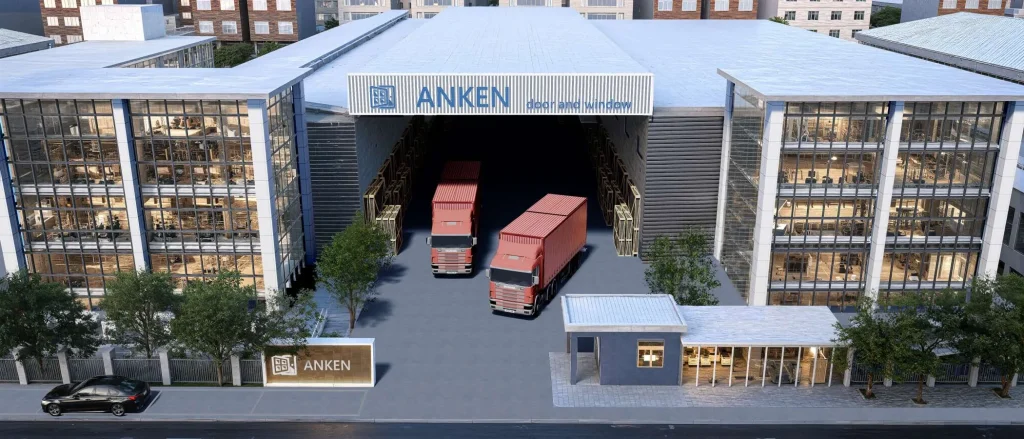
Partnering with an experienced Chinese door and window factory allows project managers to combine custom architectural design with competitive production economics. By targeting established manufacturing hubs like Foshan, demanding rigorous third-party test reports, and enforcing strict shop-floor quality protocols, global developers can consistently achieve institutional-grade fenestration outcomes
As a premier architectural aluminum door and window manufacturer based in Foshan, China, we specialize in certified thermal break systems, heavy-duty sliding doors, and custom fenestration for global commercial and residential projects. Contact our engineering team today with your project CAD/elevation drawings for a complimentary technical consultation and factory-direct quote