
Introduction: Why the Distinction Matters
In the high-end architectural market, the term “Thermal Break” is synonymous with energy efficiency. However, to the untrained eye, two aluminum window frames might look identical on the surface. For professionals, being able to identify the internal structure is crucial for ensuring project performance, meeting building codes, and justifying investment costs. This guide provides a comprehensive breakdown of how to distinguish between the two.
1. The Structural “Heart”: The PA66 Insulation Strip
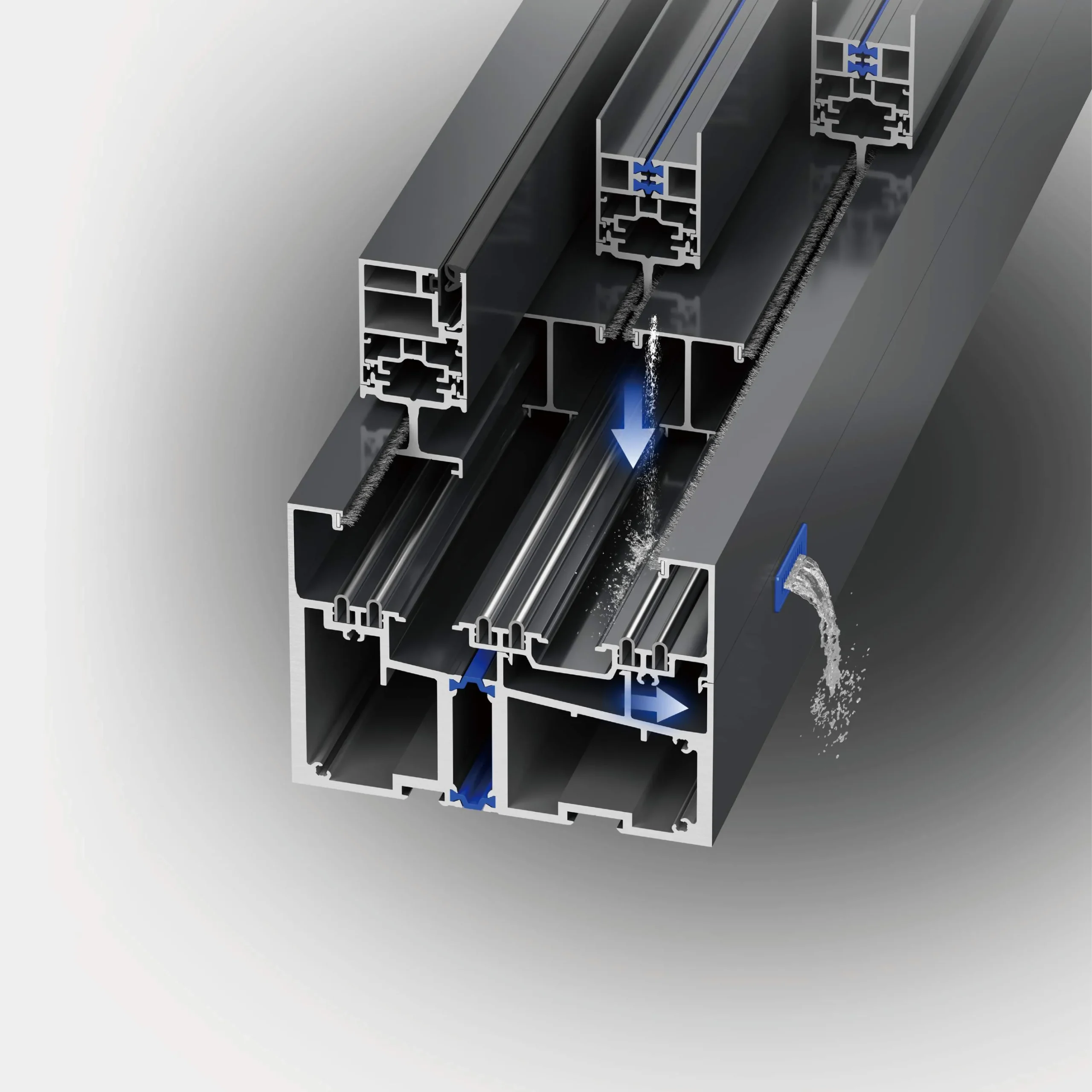
The most fundamental difference lies in the cross-section of the profile.
- Thermal Break Aluminum: If you look at a cross-section (the cut end) of the profile, you will see a “sandwich” structure. Two separate aluminum extrusions are joined by a non-metallic strip, typically PA66 GF25 (Polyamide). This strip acts as a barrier, stopping the flow of heat through the metal.
- Non-Thermal Break Aluminum: The profile is a single, continuous piece of aluminum. Since aluminum is a highly conductive metal, heat and cold travel freely from the outside to the inside.
Pro Tip: In high-end “Smart” systems like those at akncustom.com, the thermal strip is often deeper (20mm–35mm) to provide superior U-values.
2. Visual Inspection: The “Double-Color” Giveaway
A quick visual clue can often be found in the finish of the window:
- Two-Tone Capability: Because Thermal Break profiles consist of two separate pieces, they can be finished in different colors for the interior and exterior (e.g., Black exterior to match the façade and Wood-grain interior to match the decor).
- Single Color Limitation: Standard aluminum is usually a single color throughout. While it can be painted differently on each side, it is rare and lacks the clean integrated look of a true thermal break system.
3. The Temperature Test (Touch & Condensation)
This is the most practical way to identify installed windows:
- The Touch Test: On a very cold day, touch the interior aluminum frame. A Thermal Break frame will feel relatively neutral or close to room temperature. A Non-Thermal Break frame will feel ice-cold.
- The Condensation Factor: Standard aluminum windows often “sweat” in winter. Because the interior metal is cold, moisture from the indoor air condenses on the frame. Thermal break windows remain dry because the interior frame stays warm.
4. Acoustic Performance: The “Ring” Test
The density and multi-chamber design of thermal break profiles change their acoustic properties:
- Sound Dampening: Tap the frame with your knuckle. A thermal break profile produces a duller, “thicker” sound because the polyamide strip disrupts sound vibrations.
- Vibration: Standard aluminum produces a sharper, more metallic “ping” or ring, as the solid metal vibrates more freely.
5. Technical Specifications & Performance Data
When reviewing technical data sheets (TDS), the performance gap is undeniable:
| Feature | Thermal Break Aluminum | Non-Thermal Break |
| U-Value (Thermal) | 1.0 – 2.2 W/m²K (Lower is better) | 5.0 – 6.0 W/m²K |
| Energy Saving | Reduces HVAC costs by 30-40% | Minimal insulation |
| Weight | Heavier, multi-chambered | Lighter, simpler structure |
| Market Value | Premium / High-End | Budget / Economy |
6. Weight and Thickness Comparison
Because Thermal Break windows are designed for high-performance glazing (Double or Triple pane), the frames are inherently more robust.
- Heavy-Duty Profiles: Thermal break systems usually feature wall thicknesses of 1.8mm to 2.5mm to support the weight of insulated glass.
- Slimmer Profiles: Standard aluminum is often used in thinner gauges (1.2mm – 1.4mm) for simple, lightweight applications.
FAQ: How to Identify the Quality Levels of Thermal Break Aluminum Profiles
Q1: How can I distinguish between high-quality PA66 GF25 and low-grade PVC or generic plastic strips? A: This is the most critical factor for longevity. High-quality PA66 GF25 strips have a matte finish, a slightly rough texture, and are hard to ignite. More importantly, they feature clear laser-etched identification codes. Low-grade PVC strips appear shiny or overly smooth, can be easily shaved with a knife, and smell like acrid chemicals if burned. Using PVC instead of PA66 causes the “thermal bridge” to shrink and fail within 3–5 years, leading to structural instability.
Q2: Is “wall thickness” the only metric for profile strength, or should I look at the internal structure? A: While wall thickness (e.g., 1.8mm vs. 1.4mm) is vital, the internal chamber design is equally important. High-quality profiles utilize a “Multi-Chamber” structure with reinforced internal webs. This increases the “Moment of Inertia,” allowing the frame to resist bending under high wind pressure. A thin-walled profile with poor chamber engineering will vibrate and rattle, even if it claims to be “Heavy-Duty.”
Q3: How does the “Surface Finish” reflect the quality of the underlying aluminum alloy? A: A flawless surface starts with the alloy purity. High-end profiles use virgin 6063-T5 aluminum ingots. If the surface shows orange-peel textures, tiny pits, or “ripples” under the powder coating, it often indicates the use of recycled scrap aluminum. Recycled aluminum has impurities that compromise both the aesthetic finish and the structural lifespan of the window, especially in high-salt coastal environments.
Q4: What should I look for in the “Corner Assembly” to judge a factory’s manufacturing precision? A: Quality can be seen in the seams. Premium windows use heavy-duty corner cleans (internal aluminum brackets) injected with two-component corner glue. This ensures the joint is waterproof and structurally monolithic. If the corners are only joined by screws without structural adhesive, or if there are visible gaps (over 0.2mm) at the junction, the window will eventually leak air and water as the building settles.
Q5: How can I verify if the “Tempering” of the aluminum (T5 vs. T6) is up to standard? A: You can use a Webster Hardness Tester. For 6063-T5, the hardness should be between 8 and 12 Webster. If the hardness is below 8, the profile is too soft and may sag under the weight of heavy triple-glazing. If it is too high/brittle, it may crack during extreme temperature shifts. High-quality factories provide mill test reports (MTR) to verify that the aging process was performed correctly.
Q6: Does the “Depth” of the thermal break strip affect the overall performance of the window? A: Yes. The width of the thermal strip (e.g., 24mm, 35mm, or 54mm) directly determines the U-Value of the frame. High-performance “Passive House” windows utilize wider strips and insert “Isomax” foam insulation into the cavities. A narrow strip (less than 20mm) provides only basic insulation. For high-end B2B projects, always check the “Thermal Path” length—the longer the path, the better the energy efficiency.